Gela Mikava Paints on What the System Left Behind
The Georgian artist salvages Soviet-era ceiling fabric from old homes and turns it into an archive of everything a vanished world left inside us.
 ATELIERA EDITORIAL·4 MIN READ·October 9, 2026
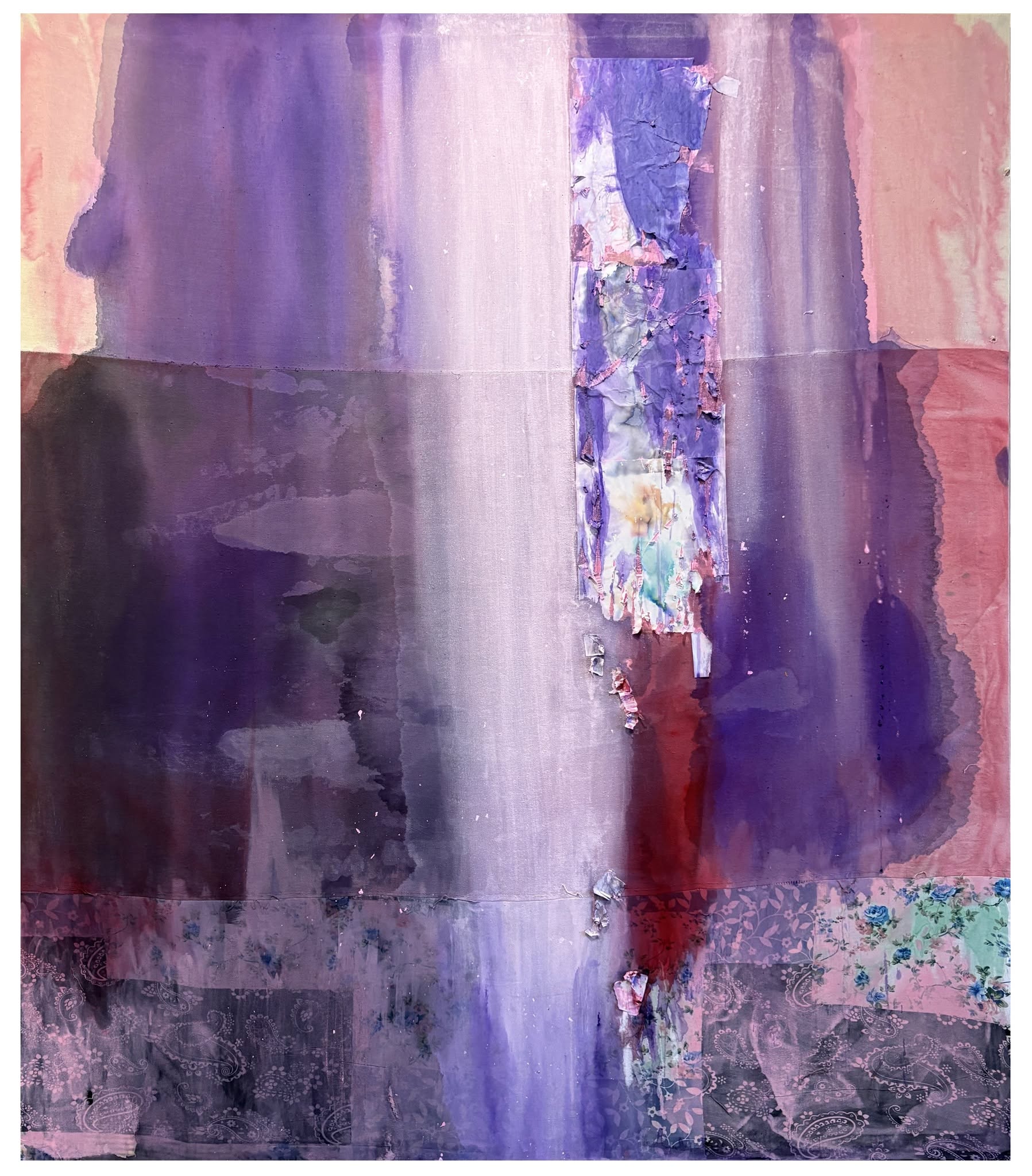
Before Gela Mikava paints a single stroke, his canvas has already lived for decades. It hung as a ceiling in a Georgian home. It absorbed dust, smoke, humidity, light and conversations. It watched a political system arrive, rule and disappear. Only then, salvaged from a demolition or a renovation, washed and stretched but never restored to neutrality, does it enter his studio.
The canvas is already an artifact before he paints on it.
Post-Socialist Radiation
Mikava was born in 1995 in Zugdidi, Georgia, a city shaped by displacement and the conflicts that ran through the post-Soviet region. He grew up surrounded by the traces of a system that had formally ended yet remained everywhere: in family histories, domestic spaces, gestures, ways of thinking.
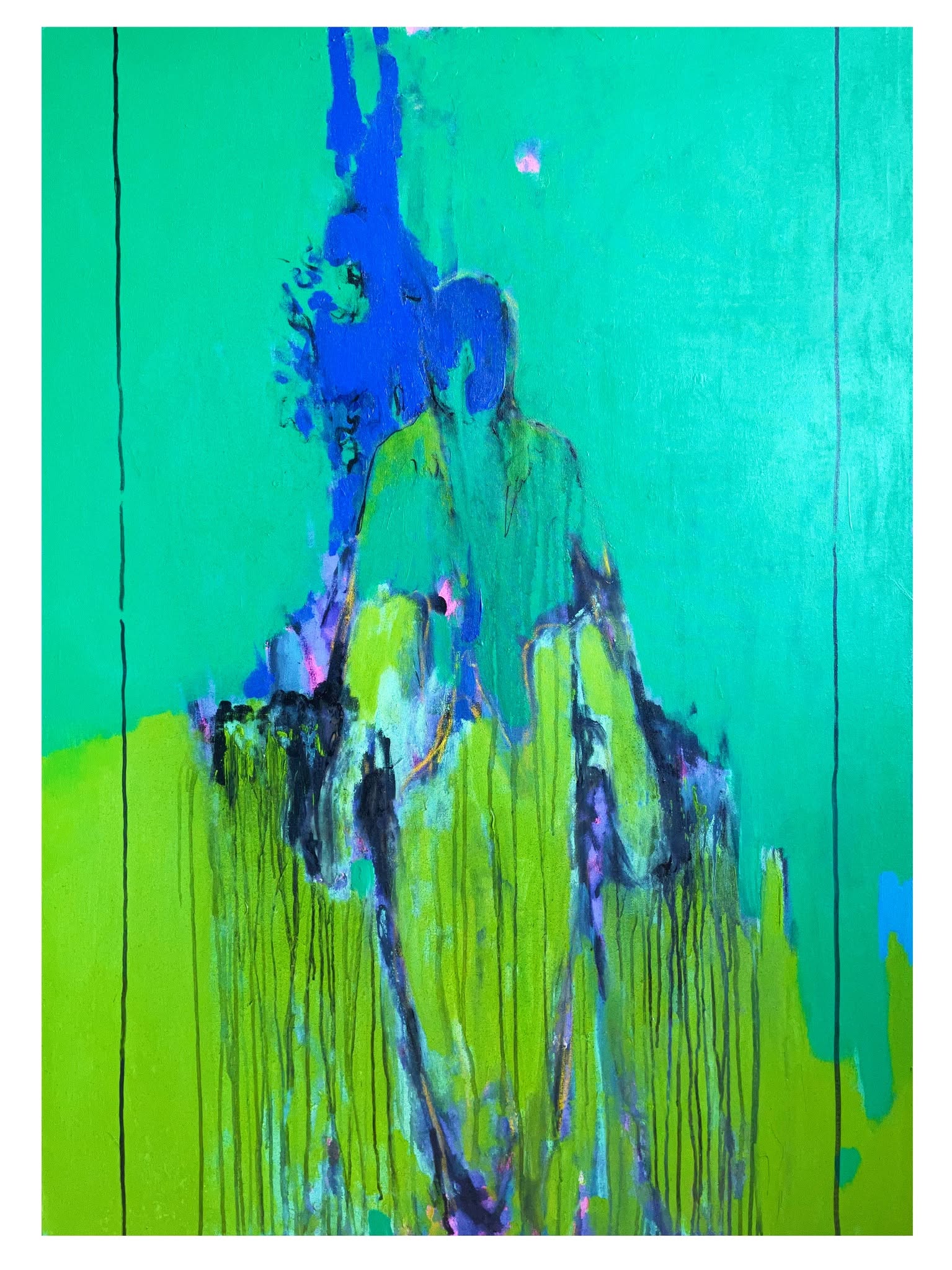
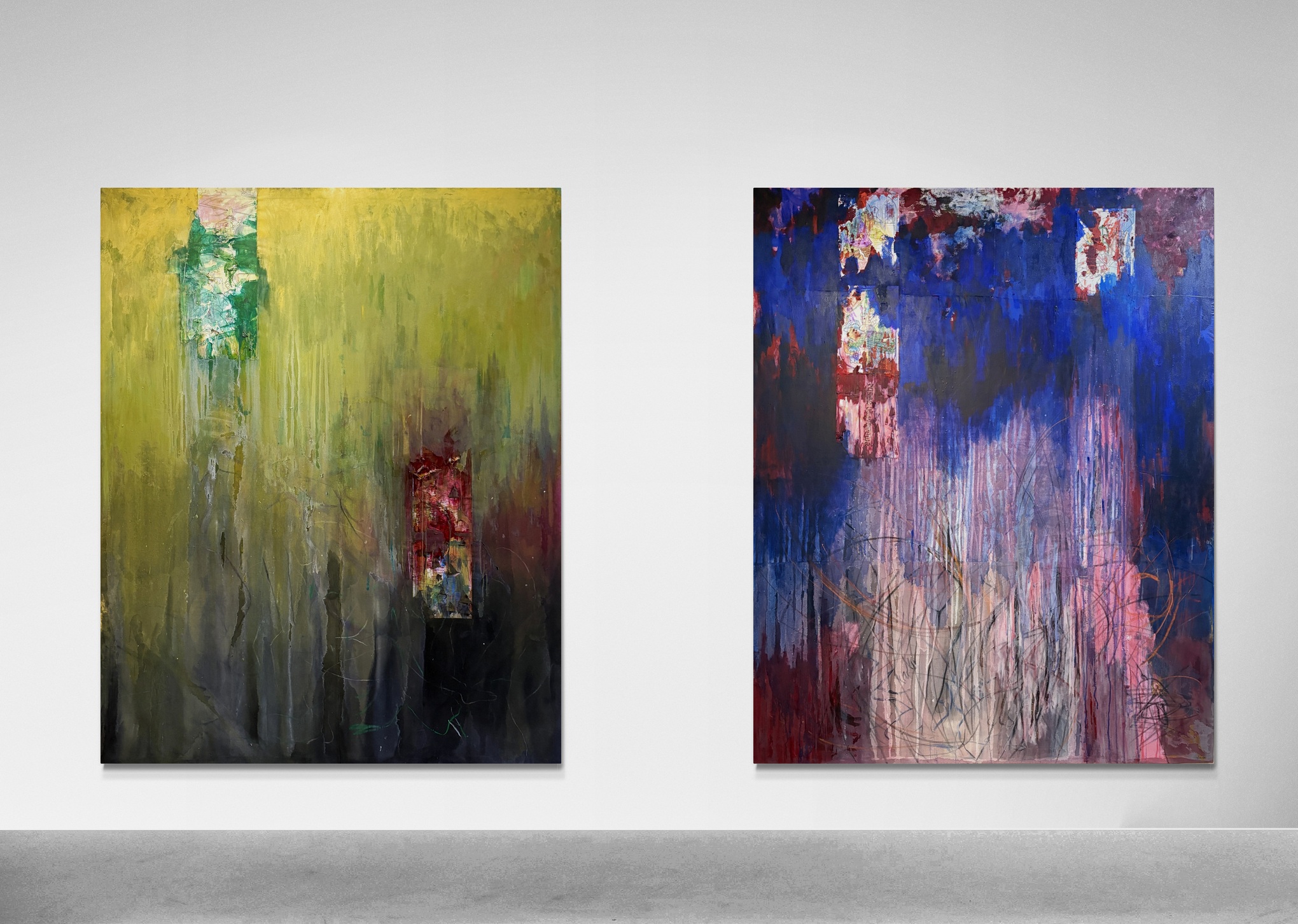
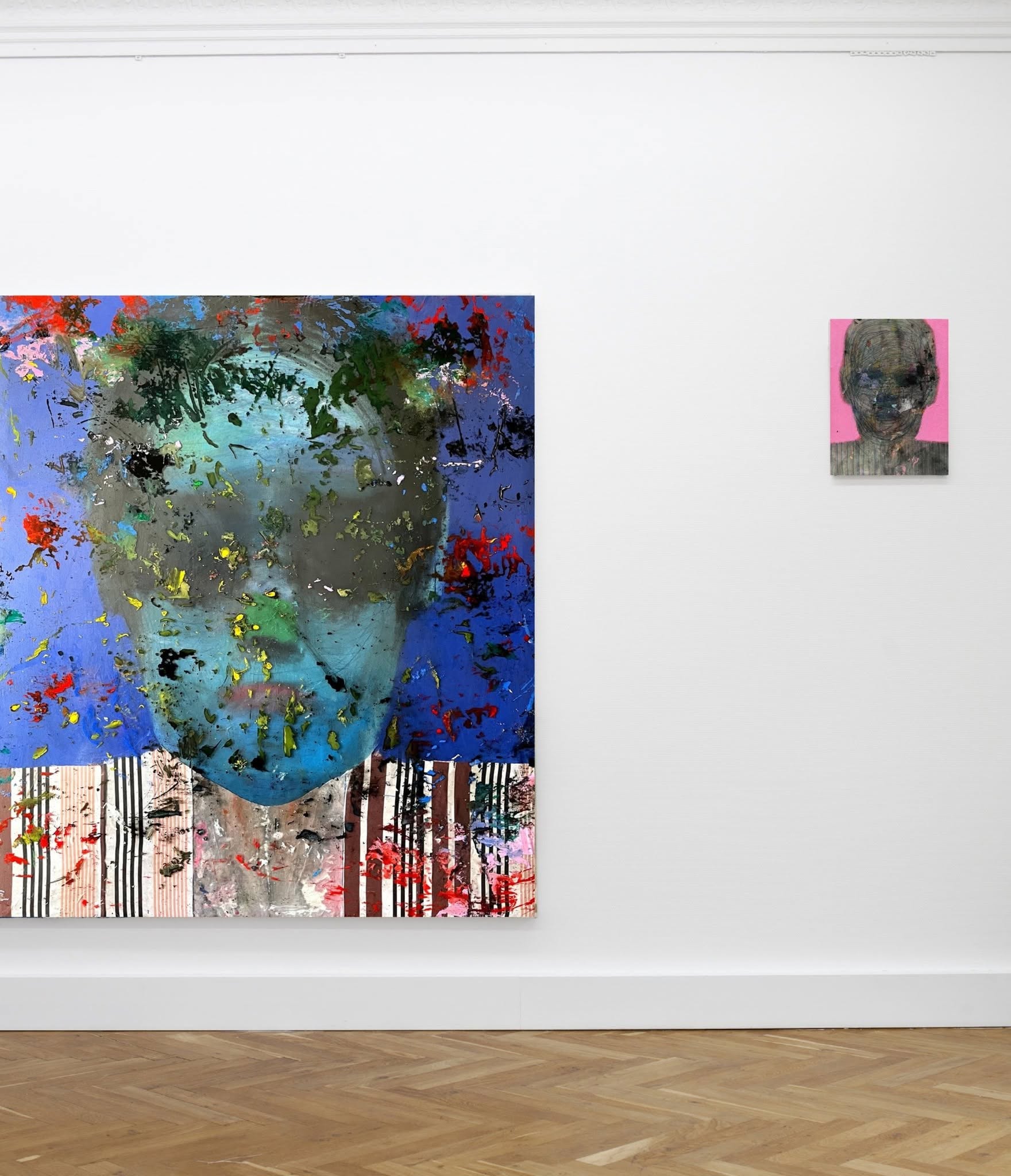
He calls this Post-Socialist Radiation. Like radiation, it cannot be seen, and like radiation, it keeps affecting what comes after. His work is not about the Soviet Union; it is about what remains after the Soviet Union. Not nostalgia, but residue. His paintings obscure, distort and fragment their images, building surfaces where recognition is possible but never complete, and his question never changes: what remains in us when the system that shaped us is already gone?
The ceiling becomes the archive
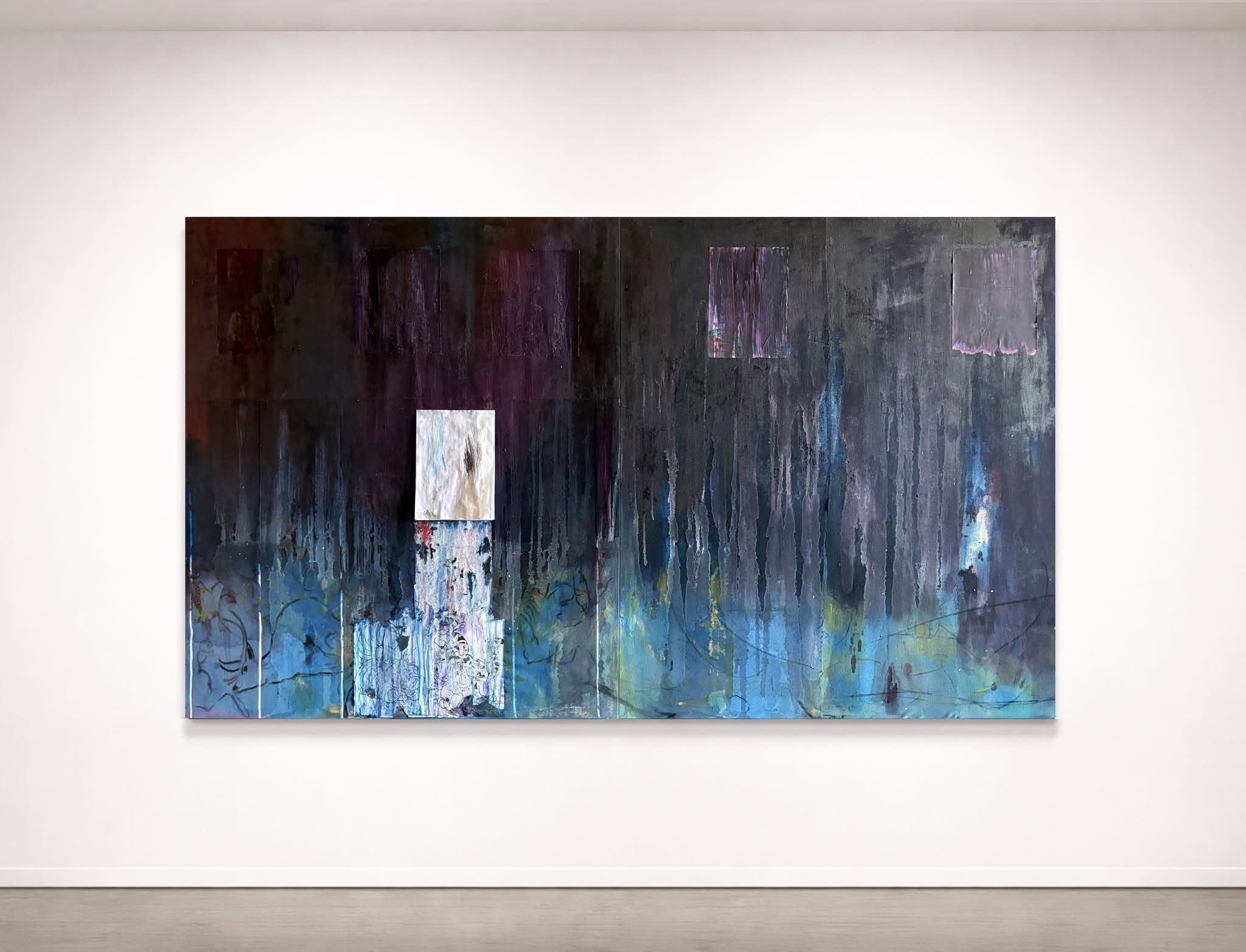
The defining material of his practice is biazi, the cotton fabric once used across the Soviet Union to line the ceilings of ordinary homes. Mikava does not buy imitation; he works exclusively with authentic, second-hand fabric recovered from old interiors in Zugdidi and elsewhere in Georgia. The preparation is deliberately slow. Old glue and paper are washed away, but the stains, folds and damage stay visible. Then oil, acrylic, pastel, ink and pigment are allowed to penetrate and dissolve into the textile, so the fabric absorbs the image rather than simply holding it.
Something functional, inexpensive and almost invisible becomes a historical surface: an archive without written history. It does not tell you what happened in those rooms. It carries the possibility that something did.
The architect’s hand
Mikava never attended an art academy. He studied architecture at Georgian Technical University, taking his Master’s in 2021, and it shows in the work’s structural precision: the grids, the verticals, the disciplined geometry underneath the emotional weather. The architecture gives the paintings their bones. The intuition, ambiguity and freedom are entirely his own.
Now based in Tbilisi, Mikava is turning an overlooked domestic material into some of the most quietly political painting coming out of the Caucasus: surfaces where personal memory and collective history overlap, and where the past is not represented but physically present.
Gela Mikava’s work is available now on Ateliera.
"The canvas is already an artifact before he paints on it."